Treated by Dr. Surya Sri Krishna Gour
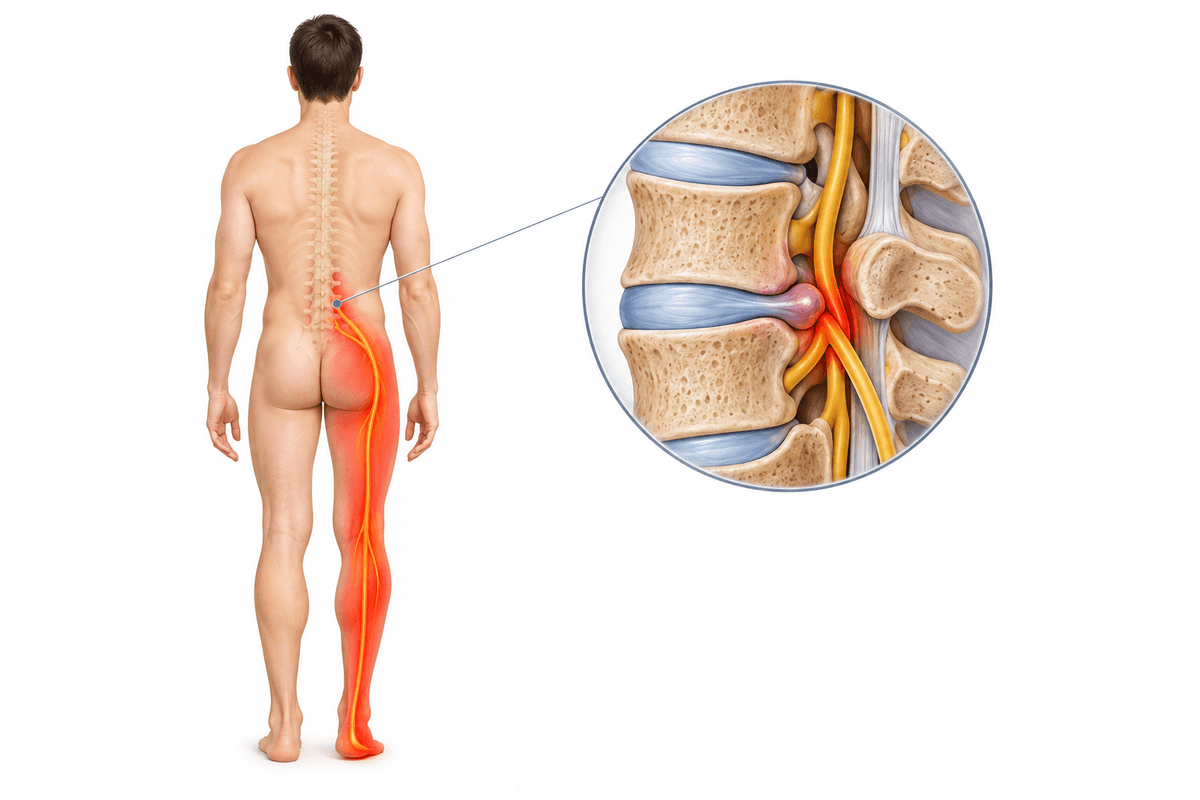
Sciatica describes pain that radiates along the path of the sciatic nerve, which runs from your lower back through your hips and buttocks and down each leg. It typically affects only one side of your body and occurs when the nerve becomes compressed or irritated, most commonly by a herniated disc, bone spur, or spinal narrowing.
Pain that develops suddenly and typically lasts for a few days to weeks. Often responds well to conservative measures and self-care.
Persistent or recurring pain lasting more than three months. May require a more comprehensive treatment approach and further evaluation to identify underlying causes.
Less common form where both legs are affected. May indicate more serious spinal conditions such as cauda equina syndrome and requires prompt assessment.
Multiple factors can contribute to the development and progression of this condition.
Recognising the signs early gives you more treatment options.
Dr Surya Sri Krishna Gour begins with a detailed history and physical examination, including neurological testing to assess nerve function, strength, reflexes, and sensation. Imaging or other investigations are ordered based on individual findings; not every patient requires every test.
From conservative to surgical — we always start with the least invasive option first.
A structured, patient-first approach from first visit to full recovery.
Dr Surya Sri Krishna Gour conducts a thorough clinical examination including neurological testing to determine the location and severity of nerve compression, and reviews any imaging studies to understand the underlying cause.
Based on examination findings, symptom severity, and patient factors, a treatment plan is developed. Conservative measures are prioritised, with interventional or surgical options considered only where clinically appropriate.
Treatment may involve collaboration with physiotherapists, pain specialists, or other healthcare providers to address both symptoms and underlying spinal conditions. Patient education is provided throughout to support informed decisions.
Progress is reviewed at follow-up appointments, and the treatment plan is adjusted based on response. Surgery is discussed if conservative management does not provide adequate improvement or if neurological findings warrant earlier intervention.
What to expect at each phase of recovery.
The first phase focuses on pain control and reducing inflammation. Many patients notice improvement within a few weeks with medications, rest modification, and gentle activity. Recovery timelines vary widely based on individual factors.
As pain improves, structured physical therapy helps restore function, build core strength, and prevent recurrence. This phase may last several weeks to months, with gradual return to normal activities guided by symptom response.
Ongoing attention to posture, body mechanics, regular exercise, and ergonomic adjustments helps maintain improvement. Some patients experience complete resolution, while others may have occasional mild symptoms that are manageable with self-care.
Many patients experience significant reduction in leg pain and improved ability to perform daily activities with appropriate treatment. The degree and duration of relief vary depending on the underlying cause and individual response.
Weakness and numbness may improve over time once nerve compression is relieved, though recovery can be gradual. Long-standing or severe nerve compression may result in incomplete recovery of strength or sensation.
Sciatica can recur, particularly in patients with ongoing degenerative spine conditions. Preventive strategies and lifestyle modifications help reduce this risk, but cannot eliminate it entirely.
Outcomes depend on many factors including the specific cause, duration of symptoms before treatment, overall health, and adherence to rehabilitation. Some patients recover fully while others manage ongoing symptoms.
Without appropriate management, sciatica may persist and interfere with daily activities, sleep, and quality of life. Prolonged nerve compression can lead to progressive weakness or permanent nerve damage in some cases. Severe complications such as cauda equina syndrome, though rare, require urgent intervention to prevent lasting bowel, bladder, or lower limb function loss.
Seek medical evaluation if you experience persistent leg pain that does not improve with rest and self-care measures, or if you develop weakness, numbness, or difficulty walking. Immediate medical attention is necessary if you have sudden loss of bladder or bowel control, numbness in the groin or inner thigh area, or progressive weakness in both legs, as these may indicate cauda equina syndrome requiring urgent treatment.
Early treatment means more options and better outcomes. Book a consultation to understand your condition and explore the right path forward.