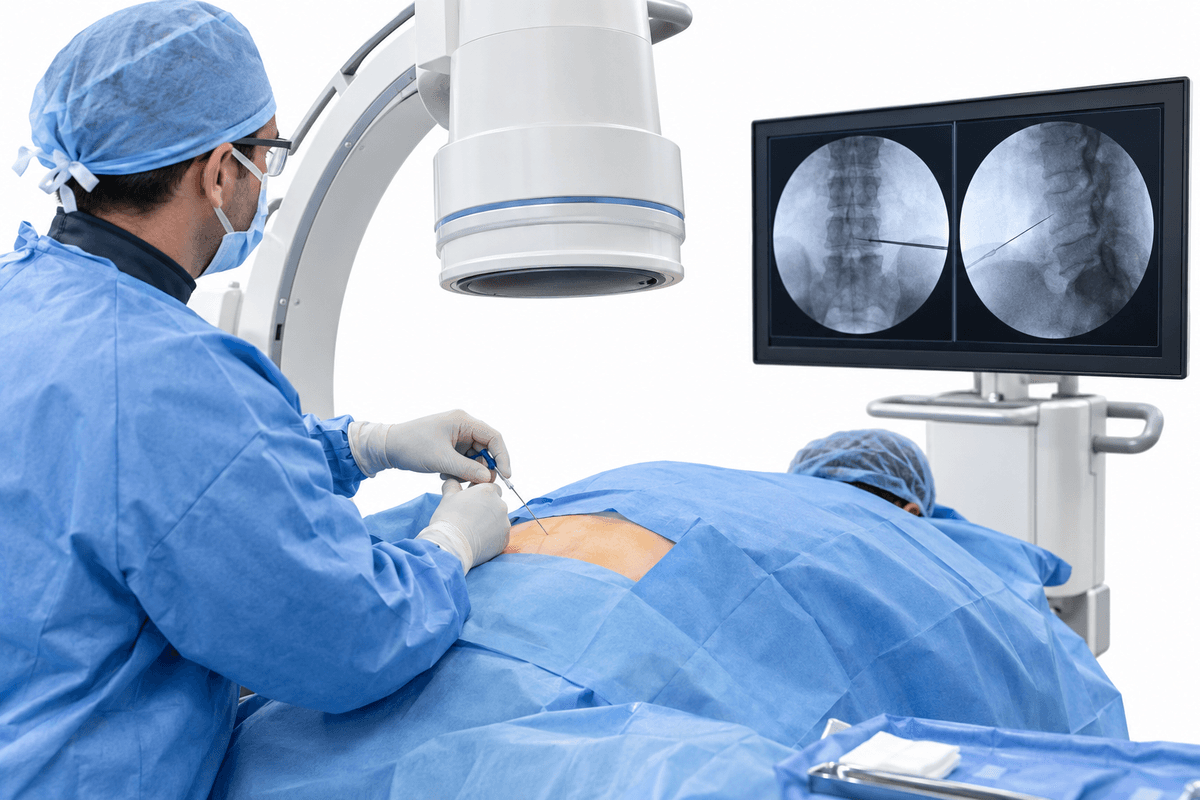
Performed by Dr. Surya Sri Krishna Gour
Interventional pain procedures are minimally invasive techniques used to diagnose and manage chronic pain conditions. These procedures include nerve blocks, epidural injections, radiofrequency ablation, and spinal cord stimulation. Dr Surya Sri Krishna Gour evaluates each patient individually to determine which approach may be appropriate based on the pain location, underlying cause, and response to conservative treatments.
We believe in honest, upfront disclosure so you can make an informed decision.
A step-by-step look at what happens during this procedure.
The clinical team reviews the patient's medical history, imaging studies, and pain patterns to identify the pain source and select the appropriate procedure.
The patient is positioned on the procedure table. The skin over the treatment area is cleaned and draped in a sterile manner.
Fluoroscopy or ultrasound is used to visualize the target area and guide the needle or electrode to the correct location with precision.
Depending on the procedure, medication (such as local anaesthetic, steroid, or nerve block), radiofrequency energy, or a stimulator lead is delivered to the target site.
The patient is observed in a recovery area for a short period to ensure there are no immediate complications before being discharged with post-procedure instructions.
A structured, patient-first approach from first consultation to full recovery.
Dr Surya Sri Krishna Gour evaluates each patient's pain history, physical examination findings, and imaging to tailor the procedure to the individual's needs.
Procedures are performed under fluoroscopy or ultrasound guidance to ensure accurate targeting of nerves, joints, or the epidural space.
The choice of procedure—whether nerve block, epidural injection, radiofrequency ablation, or another method—is based on the specific pain generator and patient response.
Patients receive clear instructions for activity, pain management, and scheduled follow-up visits to assess response and plan further care if needed.
What to expect at each stage of your recovery journey.
Rest is advised for the remainder of the day. Some soreness or increased pain at the injection site is common and typically resolves within a day or two. Ice packs may help reduce discomfort.
Most people can resume light daily activities within a few days. Avoid strenuous exercise, heavy lifting, or bending for about a week, or as advised by the clinical team.
Physical therapy or gentle exercises may be recommended to maintain mobility and strength. Pain relief may develop gradually, and some procedures may need to be repeated. Individual recovery varies based on the underlying condition and overall health.
The procedure aims to reduce chronic pain and improve function, allowing patients to participate more comfortably in daily activities and rehabilitation. The degree and duration of relief vary between individuals.
Some procedures help confirm the source of pain, guiding further treatment decisions. A positive response to a nerve block, for example, may indicate which structure is causing symptoms.
Many interventional pain procedures provide temporary relief rather than permanent cure. Repeat procedures or additional treatments may be needed over time, depending on the underlying condition.
These procedures manage symptoms but do not correct structural problems such as herniated discs or spinal stenosis. Comprehensive care may include medication, physical therapy, lifestyle changes, or surgery when indicated.
The right choice depends on your diagnosis, risks and circumstances — discussed with you at your consultation.
Pain medications, anti-inflammatory drugs, and muscle relaxants may be tried first, especially for new or mild symptoms. This approach is suitable when pain is manageable and function is preserved.
Structured exercise, manual therapy, and education can strengthen supporting muscles and improve posture, reducing pain without procedural intervention. This is often the first line of treatment.
When pain is caused by a structural problem that can be corrected—such as a herniated disc compressing a nerve—surgery may be considered if conservative and interventional treatments have not provided sufficient relief. The choice depends on diagnosis, symptoms, imaging, and patient circumstances.
Let's clear up some of the most common myths about interventional pain procedures.
Get a personalised assessment from an experienced specialist. Understand your options, ask your questions, and decide with confidence.