Performed by Dr. Surya Sri Krishna Gour
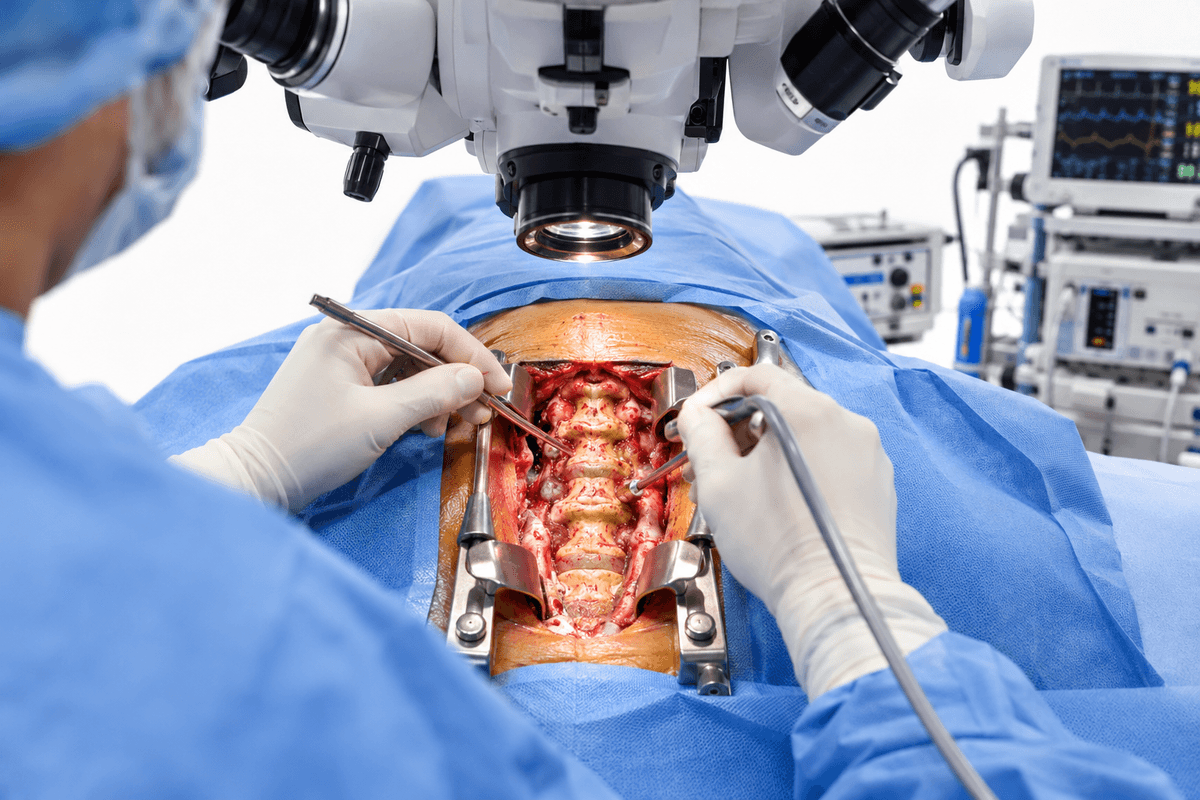
Open spine surgery involves making an incision to directly access the spine for treatment of various spinal conditions. The surgeon can visualize and work on the affected area directly, whether to remove herniated disc material, decompress nerves, stabilize vertebrae, or address other structural problems. This approach provides comprehensive access for complex spinal issues that cannot be managed with non-surgical care.
We believe in honest, upfront disclosure so you can make an informed decision.
A step-by-step look at what happens during this procedure.
An incision is made over the affected spinal level, and muscles are carefully moved aside to expose the spine.
The surgeon removes a portion of bone or ligament if needed to reach the compressed nerves or damaged disc.
The specific problem is addressed—removing herniated disc material, widening the spinal canal, removing a tumour, or preparing for fusion.
In some cases, screws, rods, or bone graft are placed to stabilize the spine and promote fusion between vertebrae.
Muscles are returned to position, and the incision is closed in layers with sutures or staples.
A structured, patient-first approach from first consultation to full recovery.
Dr Surya Sri Krishna Gour reviews imaging studies, discusses surgical goals, and plans the specific approach based on your spinal condition.
The procedure is performed with attention to preserving healthy tissue while achieving adequate decompression or stabilization as required.
Nerve function is monitored during surgery to help protect spinal cord and nerve roots.
Recovery instructions, physiotherapy guidance, and follow-up schedules are provided to support healing and functional restoration.
What to expect at each stage of your recovery journey.
You will be monitored in hospital with pain management, wound care, and assistance with initial movement. Physiotherapy begins early to prevent complications.
Activity is gradually increased following specific restrictions about bending, lifting, and twisting. Wound care continues at home, and any prescribed physiotherapy or rehabilitation is started.
Strength and flexibility are rebuilt through structured exercises. Return to work and normal activities is phased according to healing progress and the nature of your work. Individual timelines vary based on the extent of surgery and overall health.
The procedure aims to reduce pressure on spinal nerves, which may improve radiating pain, numbness, or weakness in the arms or legs.
Fusion procedures seek to stabilize unstable segments of the spine, potentially reducing mechanical back pain, though results vary individually.
Long-standing nerve damage or pre-existing degeneration in other spinal segments may not be corrected by surgery.
Functional improvement depends on participation in rehabilitation and adherence to activity guidelines during healing.
The right choice depends on your diagnosis, risks and circumstances — discussed with you at your consultation.
Physiotherapy, pain medication, activity modification, and spinal injections may be tried first for many spinal conditions when symptoms are not severe or progressive.
Smaller incisions and specialized instruments can address some spinal problems with less tissue disruption, suitable when anatomy and pathology allow.
For patients who are not candidates for surgery due to medical risks or personal choice, ongoing pain management and supportive care may be the appropriate path.
Let's clear up some of the most common myths about open spine surgery.
Get a personalised assessment from an experienced specialist. Understand your options, ask your questions, and decide with confidence.