Treated by Dr. Surya Sri Krishna Gour
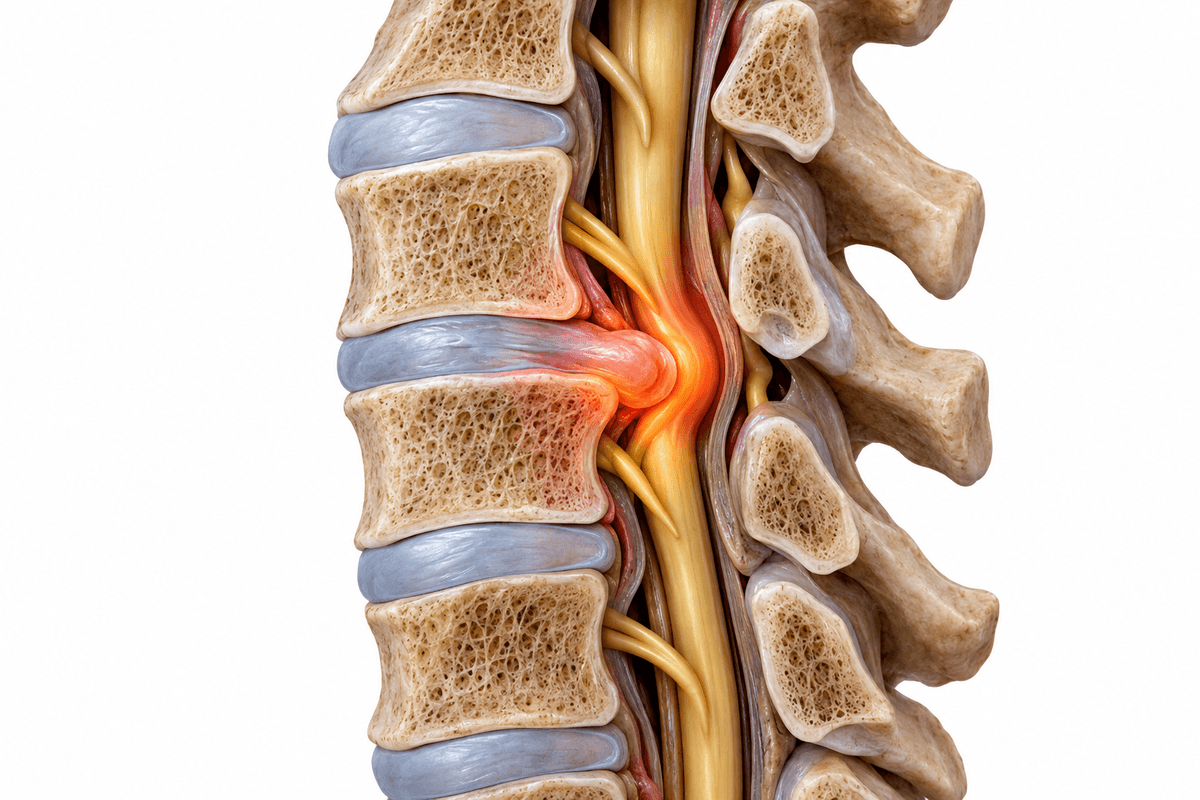
Cervical disc disorders refer to problems affecting the soft, cushion-like discs that sit between the bones (vertebrae) of your neck. These discs can bulge, tear, or wear down over time, sometimes pressing on nearby nerves or the spinal cord. When this happens, you may experience neck pain, stiffness, or symptoms that travel into your shoulders, arms, or hands. Dr Surya Sri Krishna Gour provides assessment and management of cervical disc conditions in Somajiguda, with care tailored to each patient's needs.
The inner gel-like material of the disc pushes through a tear in the outer layer, sometimes pressing on a nerve root or the spinal cord.
The disc gradually loses water content and height with age or wear, which can lead to stiffness, bone spurs, or narrowing of the space around nerves.
Compression or irritation of a nerve root in the neck, often caused by a herniated or degenerative disc, leading to pain or numbness radiating down the arm.
Multiple factors can contribute to the development and progression of this condition.
Recognising the signs early gives you more treatment options.
Assessment begins with your medical history and a physical examination, including checks of neck movement, strength, sensation, and reflexes. Imaging and other tests are ordered based on your symptoms and examination findings; not every patient requires every investigation.
From conservative to surgical — we always start with the least invasive option first.
A structured, patient-first approach from first visit to full recovery.
Dr Surya Sri Krishna Gour takes a thorough history of your symptoms, examines your neck, arms, and reflexes, and reviews any imaging to understand the exact nature and location of the disc problem.
Based on the findings, a treatment plan is tailored to your condition, starting with conservative measures such as physiotherapy and medications, with procedural options discussed only when relevant.
Your progress is regularly reviewed, and the treatment approach is adjusted as needed. This ensures that care evolves with your response and changing needs.
If surgery becomes necessary, the procedure is explained clearly, including what it involves, the expected recovery, and realistic outcomes, so you can make an informed decision.
What to expect at each phase of recovery.
In the first few days to weeks after starting treatment, the focus is on reducing pain and inflammation. Activity is modified, and guidance is given on safe movements.
As symptoms improve, a structured exercise program helps restore strength, flexibility, and function. This phase can last several weeks to months, depending on the severity and treatment approach.
Ongoing attention to posture, regular exercise, and lifestyle adjustments help maintain neck health and reduce the risk of recurrence. Individual timelines and outcomes vary.
Many patients experience significant relief of neck and arm pain with appropriate treatment, though the degree and speed of improvement vary individually.
Tingling and numbness often improve when pressure on nerves is reduced, but long-standing nerve damage may not fully reverse.
Rehabilitation can restore much of the lost neck and arm strength, though some stiffness or limitation may persist, especially in advanced degenerative conditions.
Some disc problems are part of ongoing degenerative changes; while treatment addresses current symptoms, it does not stop natural aging processes in the spine.
Without treatment, a cervical disc problem may worsen over time, leading to increased pain, more severe nerve symptoms, and progressive weakness in the arms or hands. In cases where the spinal cord is compressed, there is a risk of developing difficulty with walking, balance, and bladder or bowel control. Early assessment and appropriate management help reduce these risks.
You should seek medical attention if you have persistent neck pain that does not improve with rest, or if you develop pain, numbness, or weakness radiating into your shoulder, arm, or hand. Urgent evaluation is needed if you experience sudden weakness in your arms or legs, difficulty walking, loss of balance, or problems with bladder or bowel control, as these may indicate spinal cord involvement.
Early treatment means more options and better outcomes. Book a consultation to understand your condition and explore the right path forward.