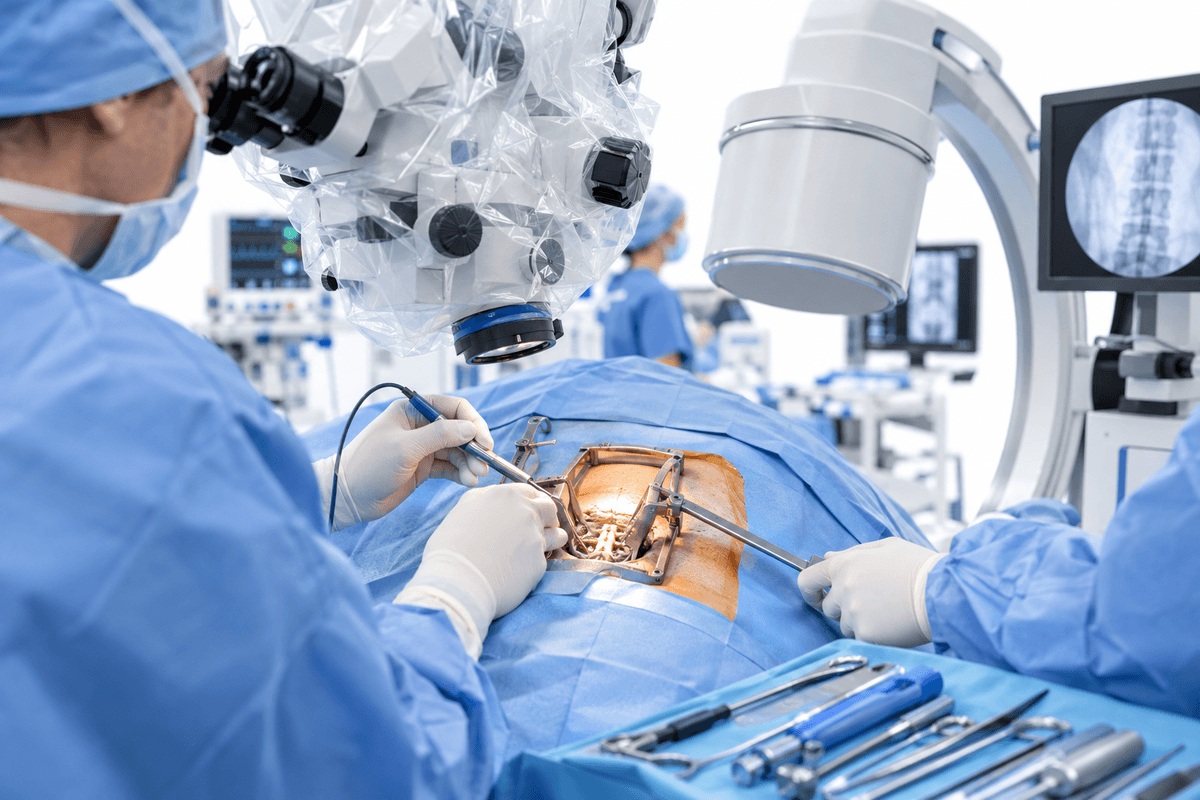
Performed by Dr. Surya Sri Krishna Gour
Spinal decompression surgery removes bone, disc material or tissue that is pressing on spinal nerves or the spinal cord. It is used when narrowing of the spinal canal or nerve compression causes pain, numbness or weakness that does not improve with other treatments. Dr Surya Sri Krishna Gour evaluates each patient to determine whether surgery is appropriate based on symptoms, imaging findings and response to conservative care.
We believe in honest, upfront disclosure so you can make an informed decision.
A step-by-step look at what happens during this procedure.
An incision is made over the affected area of the spine to access the vertebrae and compressed nerves.
Part of the lamina, bone spurs, thickened ligaments or herniated disc material is carefully removed to relieve pressure on the nerve or spinal cord.
The surgeon checks that the nerve has adequate space and is no longer compressed.
If the spine needs support, fusion with bone graft and hardware may be performed to prevent instability.
The incision is closed with sutures or staples and a dressing is applied.
A structured, patient-first approach from first consultation to full recovery.
Dr Surya Sri Krishna Gour reviews your MRI scans, symptoms and medical history to plan the exact level and extent of decompression needed.
Using microsurgical techniques, he removes the structures compressing the nerves while preserving as much healthy bone and tissue as possible.
Nerve function is monitored throughout the procedure to protect the spinal cord and nerve roots.
He provides guidance on wound care, mobilisation and physiotherapy to support recovery and return to activity.
What to expect at each stage of your recovery journey.
Pain is managed with medication. Walking short distances is encouraged within a day or two to prevent complications. Bending, twisting and lifting are restricted.
Gentle activity is gradually increased. Physiotherapy helps rebuild strength and flexibility. Wound care continues until the incision is fully healed.
Most patients return to daily activities. Heavier physical work or sport may require more time. Individual recovery varies based on the extent of surgery and overall health.
The surgery aims to reduce pain, numbness and weakness caused by pressure on the nerves. Symptoms that existed before compression may not fully resolve.
Many patients find they can walk further and perform activities with less discomfort. The degree of improvement depends on the duration and severity of nerve damage before surgery.
If nerves were compressed for a long time, some numbness or weakness may persist even after decompression.
Surgery addresses the current problem, but age-related changes in the spine can continue at other levels over time.
The right choice depends on your diagnosis, risks and circumstances — discussed with you at your consultation.
Strengthening and flexibility exercises can improve symptoms in mild to moderate cases. This is often the first option before considering surgery.
Injections into the spine can reduce inflammation and pain temporarily. They are useful for patients who need short-term relief or are not surgical candidates.
Anti-inflammatory drugs, nerve pain medication and activity modification may control symptoms without surgery. Suitable when compression is mild or surgical risk is high.
Let's clear up some of the most common myths about spinal decompression surgery.
Get a personalised assessment from an experienced specialist. Understand your options, ask your questions, and decide with confidence.