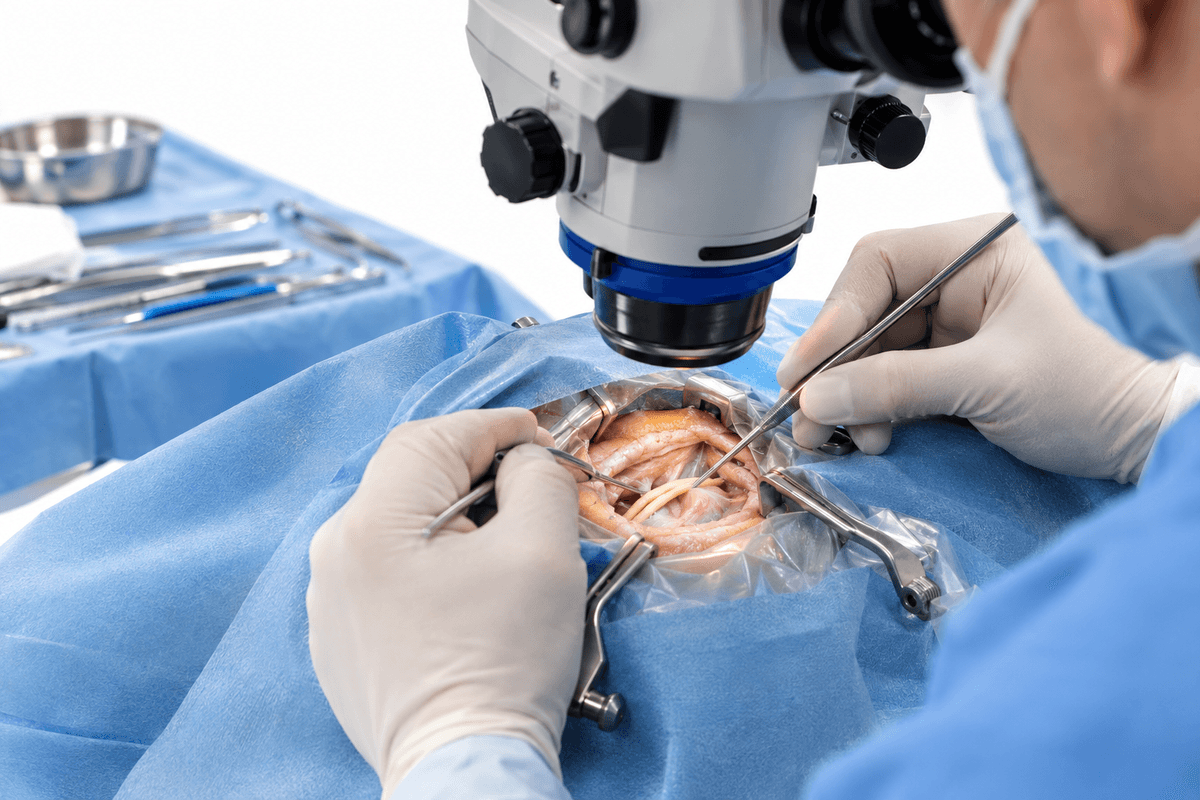
Performed by Dr. Surya Sri Krishna Gour
Compression neuropathies occur when nerves are squeezed or pressed by surrounding tissues, causing pain, numbness, or weakness. Surgery aims to release the trapped nerve by removing or adjusting the structures causing compression. Dr Surya Sri Krishna Gour evaluates each patient to determine whether surgery is appropriate based on symptoms, nerve testing, and imaging.
We believe in honest, upfront disclosure so you can make an informed decision.
A step-by-step look at what happens during this procedure.
A small incision is made over the area where the nerve is compressed, using anatomical landmarks and imaging guidance.
Tissues are carefully separated to expose the compressed nerve and identify the structures causing pressure.
The ligament, bone, or other tissue pressing on the nerve is cut, removed, or repositioned to relieve the compression.
The nerve is examined to confirm it is adequately released and to check for any additional points of compression.
The incision is closed with sutures or staples, and a sterile dressing is applied.
A structured, patient-first approach from first consultation to full recovery.
Dr Surya Sri Krishna Gour reviews your symptoms, examines the affected area, and orders nerve conduction studies and imaging to confirm the diagnosis and plan the approach.
The specific technique is chosen based on which nerve is involved and where the compression occurs, using microsurgical instruments when needed.
The procedure is performed with careful attention to preserving surrounding structures and achieving complete nerve release.
You receive instructions on wound care, activity limits, hand therapy or physiotherapy referrals, and follow-up appointments to monitor nerve recovery.
What to expect at each stage of your recovery journey.
Keep the surgical site clean and dry. Elevate the limb to reduce swelling. Pain and tenderness are common and managed with prescribed medication. Movement is limited to protect the healing tissues.
Gradual return to light use of the affected limb. Hand therapy or physiotherapy may be started to restore range of motion and strength. Avoid heavy lifting or forceful gripping during this period.
Nerve recovery continues slowly over several months. Numbness and tingling may improve gradually. Full strength and sensation may take up to six months or longer, depending on the severity of the initial compression.
Many patients notice reduction in nerve pain, numbness, and tingling after decompression, though the degree and speed of improvement vary with the duration and severity of compression.
Weakness may improve if the nerve was not permanently damaged, but muscles that have wasted significantly may not fully recover even after successful decompression.
Grip strength, fine motor skills, or walking ability may improve, allowing better performance of daily activities. The extent of functional gain depends on how long the nerve was compressed before surgery.
Some numbness, stiffness, or scar discomfort may persist. Not all symptoms resolve completely, especially if nerve damage was advanced or longstanding before surgery.
The right choice depends on your diagnosis, risks and circumstances — discussed with you at your consultation.
Splinting, activity modification, and anti-inflammatory medication may be tried first for mild compression. Surgery is reserved for cases that do not respond to these measures or when there is severe nerve damage.
Injections around the compressed nerve may reduce inflammation and provide temporary relief, but they do not address the underlying structural compression and are not suitable for all nerve sites.
If symptoms are mild and intermittent, careful monitoring without immediate intervention may be appropriate. The decision depends on the patient's functional needs, risk factors, and progression of symptoms.
Let's clear up some of the most common myths about surgeries for compression neuropathies.
Get a personalised assessment from an experienced specialist. Understand your options, ask your questions, and decide with confidence.