Performed by Dr. Surya Sri Krishna Gour
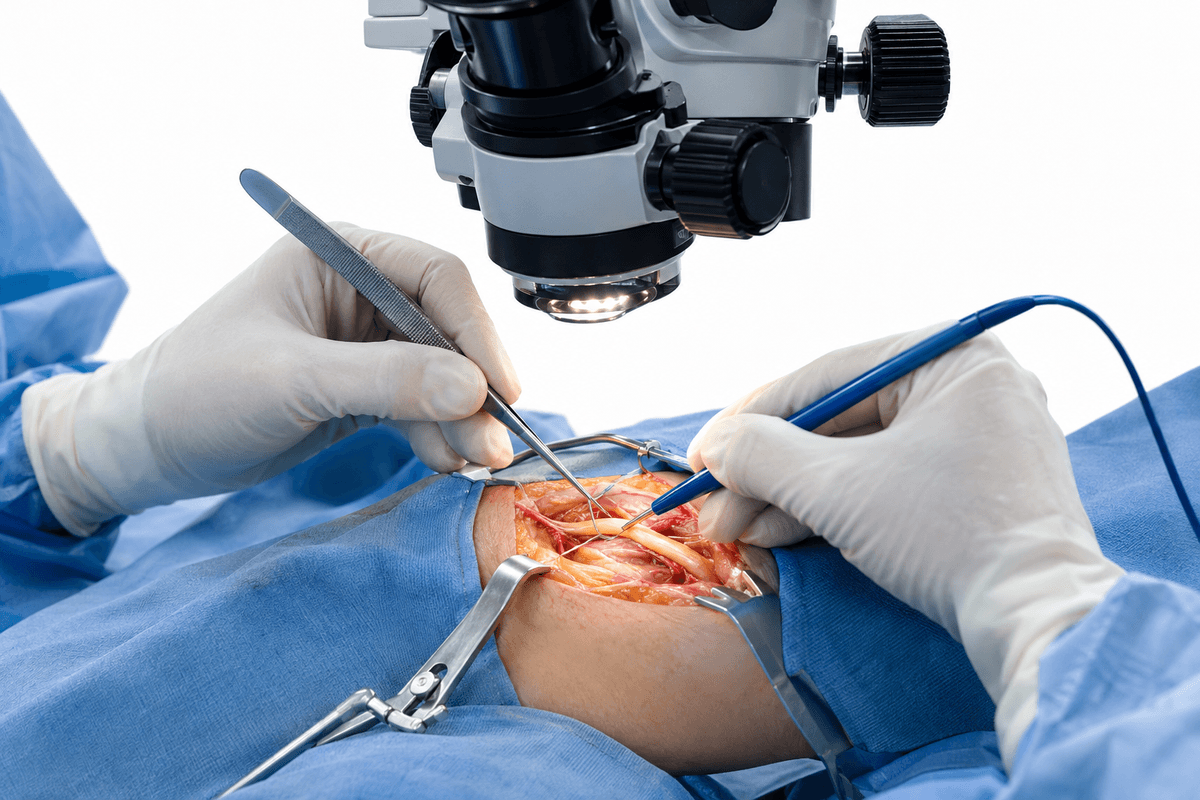
Peripheral nerve surgery treats injured or compressed nerves outside the brain and spinal cord. The procedure may involve releasing trapped nerves, repairing nerve damage, or reconstructing nerve pathways. Dr Surya Sri Krishna Gour performs these procedures to help restore nerve function when conservative treatments have not provided relief.
We believe in honest, upfront disclosure so you can make an informed decision.
A step-by-step look at what happens during this procedure.
General anaesthesia or regional nerve block is administered to ensure you feel no pain during the procedure.
An incision is made over the affected nerve area and surrounding tissues are carefully separated to expose the damaged nerve.
The surgeon examines the nerve to identify the extent of damage, compression, or scarring.
Depending on the problem, the nerve may be released from surrounding scar tissue, reconnected if severed, or grafted using a nerve from another part of the body.
The incision is closed with sutures and a sterile dressing is applied. The limb may be placed in a splint or brace for protection.
A structured, patient-first approach from first consultation to full recovery.
Dr Surya Sri Krishna Gour reviews imaging studies and conducts nerve conduction tests to map the exact location and severity of nerve damage.
Using magnification and fine instruments, the procedure is performed with precision to minimise trauma to surrounding tissues.
The surgical approach is tailored based on whether the nerve needs decompression, direct repair, or grafting.
Patients are monitored closely after surgery and given a structured rehabilitation plan to support nerve healing and function recovery.
What to expect at each stage of your recovery journey.
The surgical site is kept clean and protected. Pain is managed with prescribed medication. Movement is limited to allow initial healing.
Physiotherapy starts to maintain joint mobility and prevent stiffness. Gentle exercises support nerve recovery. Timelines vary based on individual healing.
Nerves regenerate slowly, often over several months. Gradual improvement in sensation and strength is monitored. Full recovery depends on the extent of initial damage.
Many patients experience reduced or eliminated nerve pain after decompression or repair, though some chronic pain may persist in cases of severe damage.
Nerve surgery aims to restore feeling and muscle control, but complete recovery is not guaranteed and depends on how badly the nerve was damaged before surgery.
The procedure may help restore the ability to perform daily activities and use the affected limb more effectively.
In cases of long-standing or extensive nerve injury, full function may not return even after successful surgery. Residual weakness or numbness may remain.
The right choice depends on your diagnosis, risks and circumstances — discussed with you at your consultation.
For mild nerve compression or irritation, anti-inflammatory drugs, pain relievers, and physiotherapy may provide relief without surgery. Considered when symptoms are not severe.
Corticosteroid or anaesthetic injections around the nerve can reduce inflammation and pain temporarily. Used when symptoms are intermittent or to confirm the diagnosis.
In some cases, avoiding aggravating activities and using splints or braces allows nerves to recover on their own. Suitable when symptoms are recent and mild.
Let's clear up some of the most common myths about peripheral nerve surgery.
Get a personalised assessment from an experienced specialist. Understand your options, ask your questions, and decide with confidence.