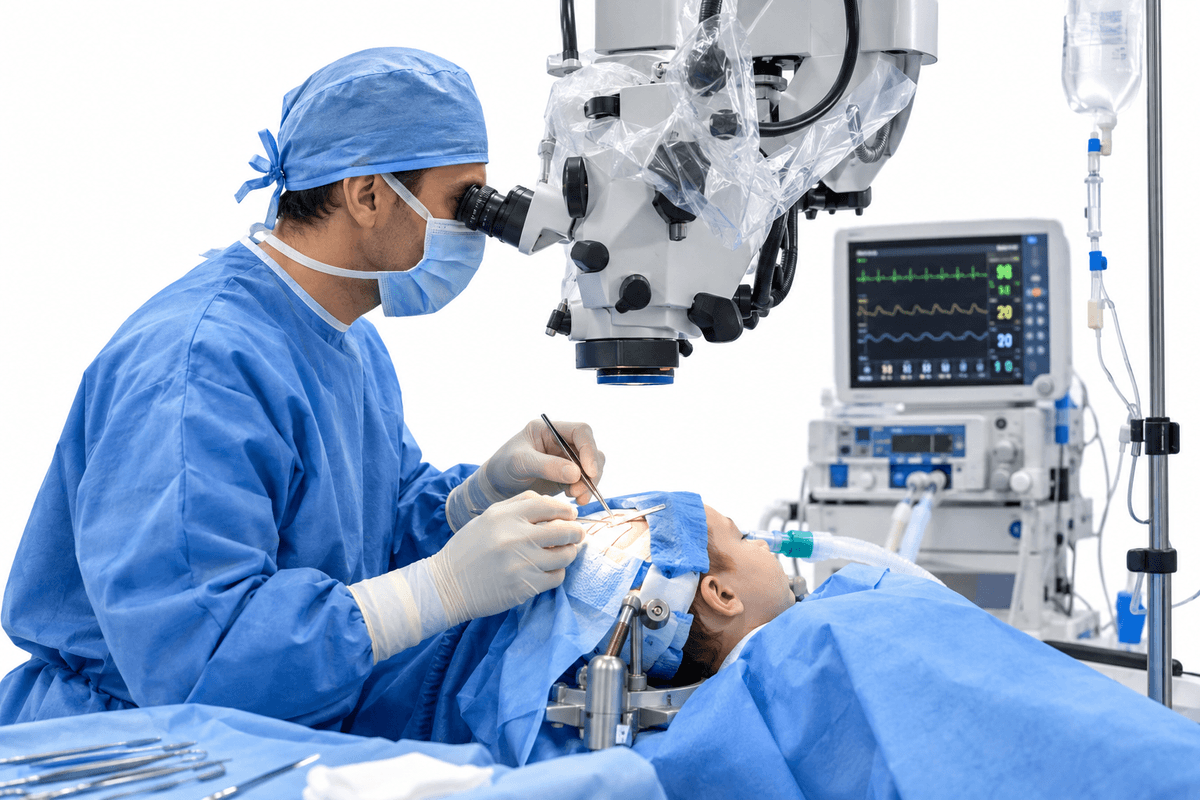
Performed by Dr. Surya Sri Krishna Gour
Pediatric neurosurgery is the surgical care of brain, spinal cord and nervous system conditions in infants, children and adolescents. These procedures address a range of congenital, developmental and acquired conditions. Treatment is tailored to each child's diagnosis, age and overall health.
We believe in honest, upfront disclosure so you can make an informed decision.
A step-by-step look at what happens during this procedure.
The neurosurgeon reviews the child's medical history, imaging scans and examination findings. The family is counselled about the procedure, expected outcomes and risks.
The child is given general anaesthesia. The head or spine is positioned and stabilised to allow safe access to the surgical site.
An incision is made in the scalp or back, and bone may be removed temporarily to reach the brain or spinal cord.
The neurosurgeon addresses the underlying problem—removing a tumour, draining fluid, repairing a malformation or relieving pressure on nerves.
The bone is replaced if needed, and the incision is closed in layers. The child is moved to recovery and closely monitored as they wake from anaesthesia.
A structured, patient-first approach from first consultation to full recovery.
Dr Surya Sri Krishna Gour examines the child, reviews imaging and discusses the diagnosis with the family to plan individualised care.
Necessary tests are arranged, and families receive clear instructions on fasting, medication and what to expect on the day of surgery.
The procedure is performed under general anaesthesia using appropriate surgical techniques for the child's specific condition.
The child is monitored during recovery, and follow-up appointments are scheduled to assess healing, manage any concerns and plan ongoing care if needed.
What to expect at each stage of your recovery journey.
The child is monitored closely for neurological status, vital signs and wound healing. Pain and nausea are managed. Length of hospital stay depends on the procedure and the child's progress.
Activity is limited to allow healing. Families watch for signs of infection or complications. Medications and wound care are managed as instructed. School and play are gradually resumed.
Most children return to age-appropriate activities within weeks to months. Some conditions require ongoing therapy, imaging or medications. Follow-up ensures the child's development and health are tracked.
Surgery may reduce or eliminate symptoms such as headaches, seizures, weakness or developmental delays caused by the underlying condition.
In some cases, the goal is to prevent further damage or worsening of the condition rather than reversing existing problems.
Certain conditions, such as hydrocephalus, may require device revisions or further surgery over time.
The extent of improvement depends on the child's age, the nature and duration of the condition, and pre-existing neurological status. Full recovery is not guaranteed.
The right choice depends on your diagnosis, risks and circumstances — discussed with you at your consultation.
For conditions such as epilepsy or raised intracranial pressure, medications may control symptoms without surgery. Surgery is considered when medications are insufficient.
Some slow-growing lesions or mild malformations may be monitored over time rather than operated on immediately. This approach is chosen when the risks of surgery outweigh the benefits.
Certain brain tumours in children may be treated with radiation or chemotherapy instead of, or in addition to, surgery. The choice depends on tumour type, location and the child's age.
Let's clear up some of the most common myths about pediatric neurosurgery.
Get a personalised assessment from an experienced specialist. Understand your options, ask your questions, and decide with confidence.