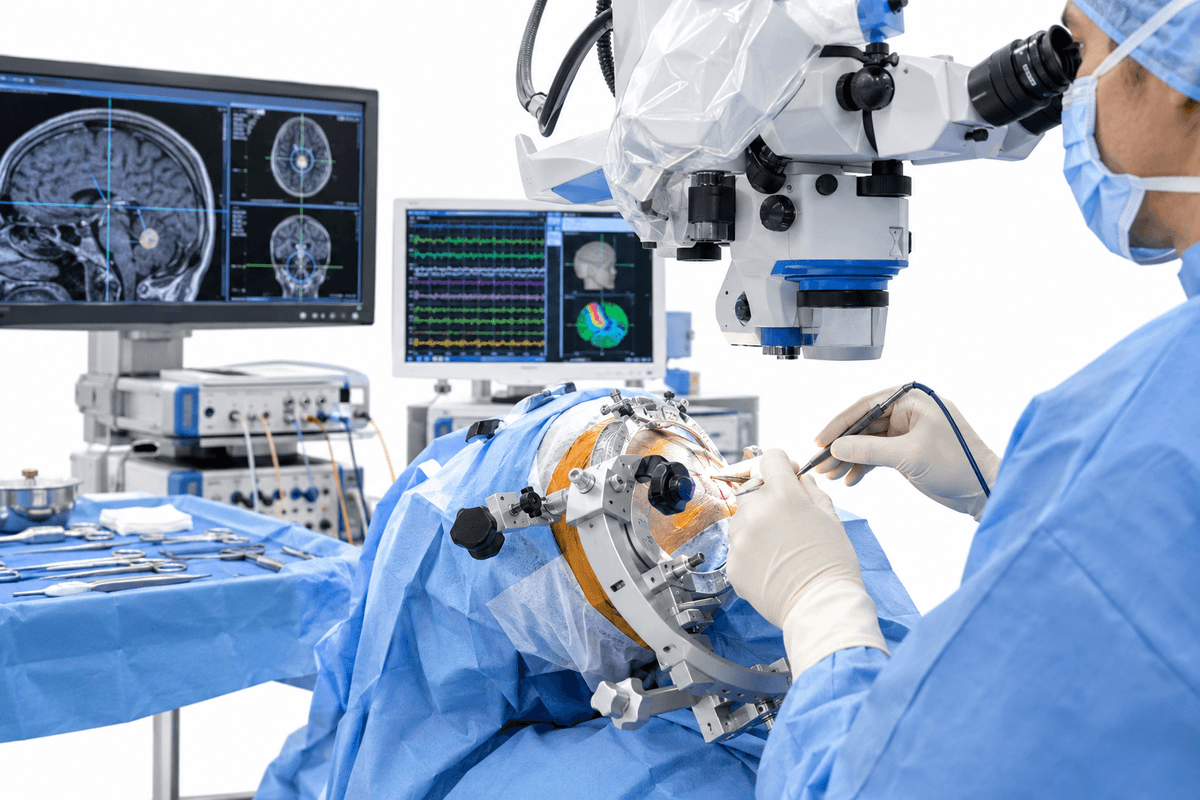
Performed by Dr. Surya Sri Krishna Gour
Epilepsy neurosurgery involves surgical procedures on the brain to reduce or stop seizures in people with epilepsy that has not improved with medication. The goal is to remove or disconnect the area of the brain where seizures begin, or to implant devices that help control seizure activity. Dr Surya Sri Krishna Gour evaluates each patient individually to determine if surgery is appropriate and which approach may be suitable.
We believe in honest, upfront disclosure so you can make an informed decision.
A step-by-step look at what happens during this procedure.
Video EEG monitoring, MRI and sometimes PET or MEG scans locate where seizures start. Neuropsychological testing checks memory and thinking. Some patients may need invasive monitoring with electrodes placed inside the skull to pinpoint the seizure focus more precisely.
You are given general anaesthesia so you are asleep and pain-free. Your head is positioned and secured. The scalp and skull are prepared with antiseptic solution.
A section of the skull is carefully removed to expose the brain surface. The size and location depend on the planned surgery.
The surgeon removes the brain tissue where seizures begin, or cuts connections to stop seizures spreading. In some cases a device is implanted instead to disrupt abnormal electrical activity. Brain mapping during surgery helps protect important functions like movement and speech.
The skull bone is replaced and secured with plates or sutures. The scalp is closed in layers. You are moved to recovery and then to a monitored unit.
A structured, patient-first approach from first consultation to full recovery.
Dr Surya Sri Krishna Gour reviews all imaging, EEG data and test results to determine if surgery is appropriate and which procedure offers the best balance of seizure control and safety for your situation.
Advanced imaging and sometimes intraoperative monitoring are used to plan the safest approach, minimise risk to important brain areas, and maximise the chance of reducing seizures.
The choice of procedure—whether resection, disconnection or device implantation—is tailored to the type of epilepsy, the brain area involved and your overall health and goals.
After surgery you are monitored closely for any complications. Anti-seizure medication is usually continued and adjusted over time based on how you recover and whether seizures improve.
What to expect at each stage of your recovery journey.
The first few days involve close monitoring for bleeding, swelling or infection. You will have some pain and fatigue. Movement and basic activities are encouraged as tolerated under guidance.
Over the first four to six weeks the incision heals and energy gradually returns. You should avoid heavy lifting, strenuous activity and contact sports. Some people notice initial improvements in seizure frequency, while others may still have seizures during this period.
Full recovery can take several months. Medication is usually continued and may be slowly reduced if seizures are well controlled. Regular follow-up with neurology and neurosurgery helps monitor progress and manage any ongoing needs.
Many patients experience fewer seizures or periods without seizures after surgery, but complete seizure freedom is not guaranteed and varies widely depending on the type of epilepsy and the surgery performed.
Most patients still need anti-seizure medication after surgery, though the dose may be reduced over time if seizures improve. Surgery is not a cure and does not replace the need for ongoing epilepsy care.
Improved seizure control can allow safer daily activities, better sleep and reduced medication side effects for some patients, but surgery carries risks of new neurological problems that may affect function.
Surgery works best when seizures come from a single, safe-to-remove area. If seizures start in multiple areas or involve critical brain regions, surgery may not be an option or may offer limited benefit.
The right choice depends on your diagnosis, risks and circumstances — discussed with you at your consultation.
Trying different combinations or newer anti-seizure medications may improve control without surgery. This is usually the first approach and is reconsidered throughout treatment.
A device implanted under the skin sends regular electrical pulses to the vagus nerve in the neck, which can reduce seizure frequency. It is less invasive than brain surgery and may be considered when resection is not safe or has not worked.
A high-fat, low-carbohydrate diet can reduce seizures in some people, particularly children. It requires careful supervision and is usually managed by a specialist dietitian and neurologist.
Let's clear up some of the most common myths about epilepsy neurosurgery.
Get a personalised assessment from an experienced specialist. Understand your options, ask your questions, and decide with confidence.