Performed by Dr. Surya Sri Krishna Gour
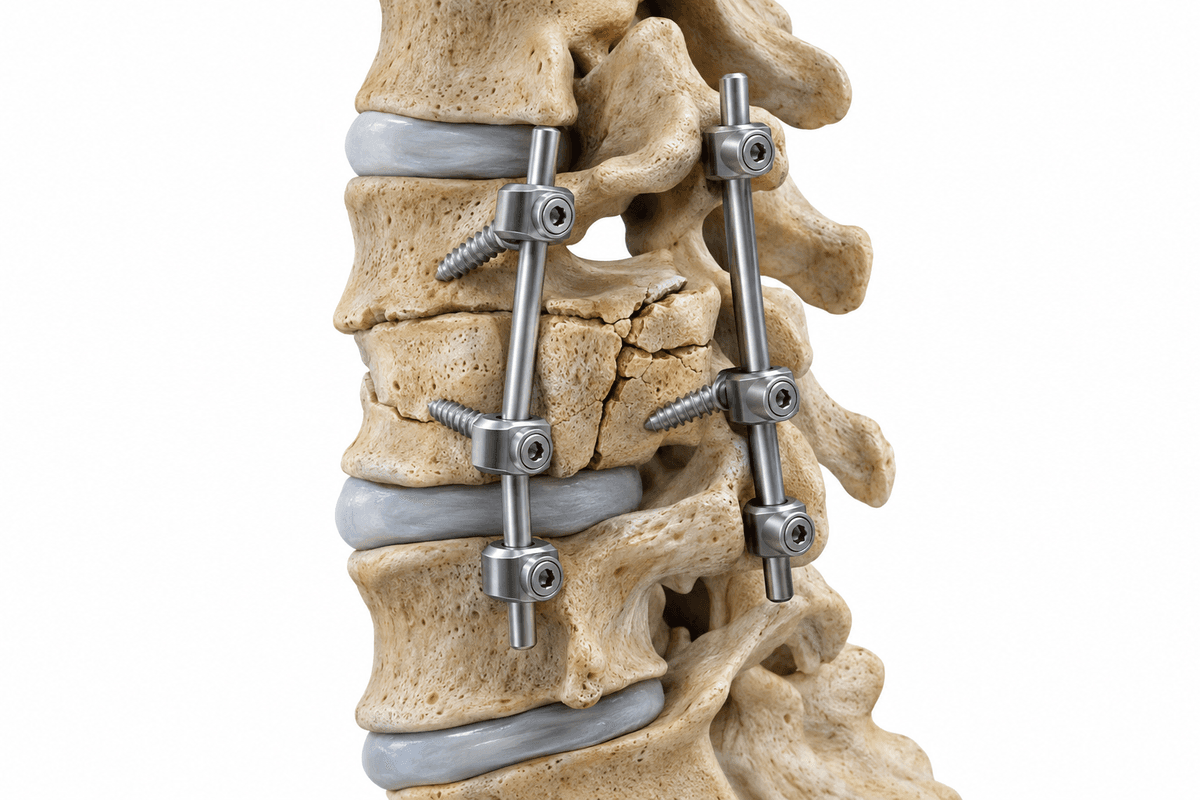
Spine fracture stabilization is a surgical procedure to repair broken vertebrae in the backbone. It uses screws, rods, or bone grafts to hold the fractured bones in place while they heal. This procedure helps protect the spinal cord, relieve pain, and restore the spine's ability to support your body weight.
We believe in honest, upfront disclosure so you can make an informed decision.
A step-by-step look at what happens during this procedure.
You receive general anaesthesia so you remain asleep and pain-free throughout the procedure.
An incision is made over the fractured area of the spine, either from the back or occasionally from the side or front, depending on the location of the fracture.
The broken bone fragments are carefully repositioned to restore the normal alignment of the spine and relieve pressure on the spinal cord or nerves.
Metal screws and rods are inserted into the vertebrae above and below the fracture to hold the bones in their correct position. Bone graft material may be added to encourage the vertebrae to fuse together over time.
The incision is closed with sutures or staples, and a sterile dressing is applied. You are then moved to a recovery area where your vital signs are monitored as you wake from anaesthesia.
A structured, patient-first approach from first consultation to full recovery.
Dr Surya Sri Krishna Gour reviews CT and MRI scans to understand the exact location and pattern of the fracture and plan the surgical approach.
Surgical techniques are used to position screws and rods accurately, often with fluoroscopic guidance to confirm placement and alignment during the procedure.
Care is taken throughout the procedure to decompress any pressure on the spinal cord or nerve roots and to avoid additional injury to neural structures.
After surgery, neurological function is checked regularly, pain is managed, and rehabilitation planning begins to support your recovery.
What to expect at each stage of your recovery journey.
You will spend the first few days in hospital with pain management and assistance getting out of bed. A back brace may be worn for support. Timelines vary, and individual instructions from your care team take priority.
After discharge, you gradually increase walking and daily activities while avoiding bending, twisting, or lifting heavy objects. Physical therapy may begin to rebuild strength and improve movement.
Over several months, the bone graft fuses the vertebrae together. Follow-up X-rays monitor healing. Most people gradually return to work and other activities, though heavy labour may require longer recovery.
The procedure aims to stabilize the fractured spine and allow you to return to upright posture and movement. However, flexibility in the fused segment is permanently reduced.
Stabilization can relieve pain caused by unstable fractures and prevent further injury to the spinal cord or nerves. It does not reverse nerve damage that occurred at the time of the initial injury.
Fusion places extra stress on the vertebrae above and below the fused area, which may lead to wear and tear over many years.
Many people regain the ability to perform daily activities, though full recovery depends on the severity of the fracture, presence of nerve injury, and individual healing capacity.
The right choice depends on your diagnosis, risks and circumstances — discussed with you at your consultation.
For stable fractures without nerve involvement, wearing a back brace and resting for several weeks may allow the bone to heal without surgery. This is considered when the fracture is minor and does not threaten spinal stability or the spinal cord.
These are minimally invasive procedures where bone cement is injected into a fractured vertebra to stabilize it. They are usually considered for compression fractures caused by osteoporosis, rather than unstable traumatic fractures.
In some cases, especially for fractures in elderly patients with significant other health conditions, careful monitoring and medication for pain may be chosen if the risks of surgery outweigh the benefits. The choice depends on the patient's overall health, fracture pattern, and goals of care.
Let's clear up some of the most common myths about spine fracture stabilization.
Get a personalised assessment from an experienced specialist. Understand your options, ask your questions, and decide with confidence.